Ngorongoro Crater
Ngorongoro Crater is one of Africa’s most spectacular wildlife destinations, famous for its vast volcanic caldera and incredible concentration of animals.
Safari Overview
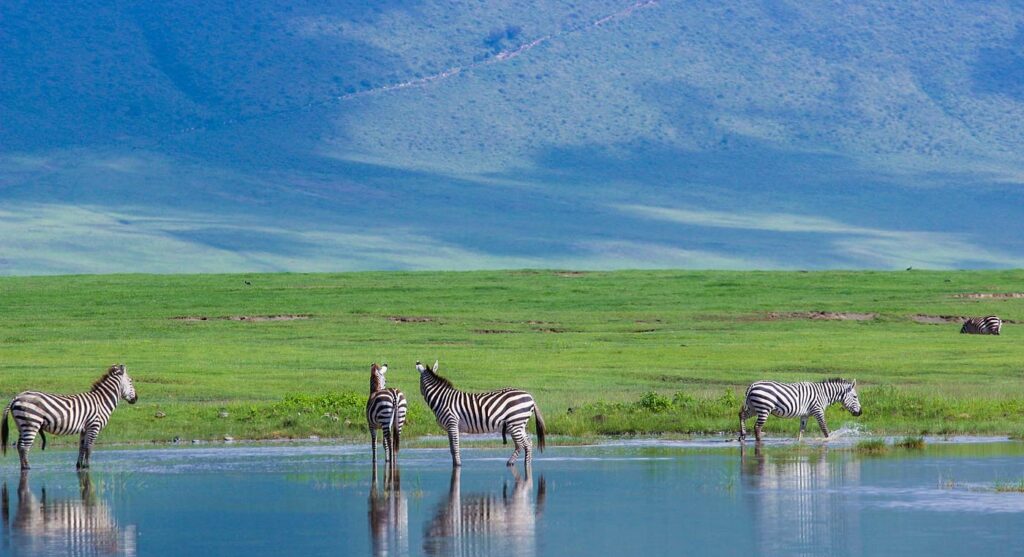
Ngorongoro Crater is one of the most remarkable wildlife destinations in Africa and part of the Ngorongoro Conservation Area in northern Tanzania. Formed millions of years ago when a massive volcano collapsed, the crater measures about 19 kilometers (12 miles) in diameter and covers roughly 260 square kilometers (100 square miles).
Often referred to as the world’s largest intact volcanic caldera, Ngorongoro supports an extraordinary concentration of wildlife. Its fertile floor contains grasslands, forests, swamps, and a soda lake, creating a natural sanctuary for animals throughout the year.
Location & Accessibility
Ngorongoro lies within Tanzania’s northern safari circuit, close to several iconic parks including:
• Serengeti National Park
• Lake Manyara National Park
• Tarangire National Park
How to Get There:
• By Road: Approximately 3–4 hours drive from Arusha.
• By Air: Charter flights from Arusha or Kilimanjaro Airport to nearby airstrips such as Lake Manyara or Ndutu.
History & Conservation Status
• Designated as part of the Ngorongoro Conservation Area in 1959.
• Recognized as a UNESCO World Heritage Site for its unique wildlife and cultural heritage.
The area is unique because wildlife and the Maasai people coexist within the same protected landscape.
Wildlife in Ngorongoro
Ngorongoro Crater hosts one of the highest densities of wildlife in Africa.
Wildlife highlights include:
• Lion
• Elephant
• Black Rhinoceros
• Buffalo
• Zebra
• Wildebeest
• Hyena
Other animals frequently seen include:
• Cheetah
• Jackal
• Hippo
• Flamingos around Lake Magadi
Because of the enclosed crater environment, many animals remain here year-round.
Landscapes & Ecosystems
Ngorongoro Crater contains several distinct ecosystems within its walls:
• Open grasslands
• Acacia forests
• Freshwater springs
• Swamps and marshes
• Soda lakes
These habitats support an incredible diversity of wildlife within a relatively small area.
Best Time to Visit
Ngorongoro offers excellent wildlife viewing throughout the year.
• June – October (Dry Season):
• Best for clear views and wildlife sightings
• Animals gather near water sources
• November – May (Green Season):
• Lush scenery and fewer visitors
• Excellent for birdwatching and photography
Safari Activities :
• Game drives inside the crater
• Wildlife photography safaris
• Birdwatching tours
• Cultural visits to Maasai communities
• Scenic viewpoints along the crater rim
The crater offers one of the most dramatic safari settings in Africa.
Accommodation Options
Accommodation options include:
• Luxury safari lodges on the crater rim
• Tented camps
• Mid-range lodges
• Campsites within the conservation area
Many lodges offer breathtaking views overlooking the crater floor.
Why Ngorongoro Is Unique
World’s largest intact volcanic caldera
Home to the rare black rhino
Extremely high wildlife density
Spectacular landscapes and viewpoints
Unique coexistence of wildlife and Maasai culture
Ngorongoro provides one of the most unforgettable safari experiences in Africa.
Free Safari Quote
By submitting this form, you agree to be contacted by Visit Creation Safaris regarding your inquiry.